Get rid of the overhead power line to your house. We install the PG&E applicant-side conduit by directional bore or open trench — under driveways, hardscape and mature landscaping — and stand for every PG&E inspection.
Overhead drops sag, catch tree limbs and fail in storms. An underground service is out of sight and out of the weather — and it’s often required when you upgrade to a 200A or 400A panel.
No more service drop through oaks and redwoods that come down in winter storms.
ReliabilityThe overhead wire across the yard disappears. A real difference on view and estate lots.
Property ValuePanel upgrades, ADUs, EV chargers and solar often trigger an underground service from PG&E.
200A–400AUnderground service lines remove an ignition and outage risk on hillside properties.
Hillside HomesApplicant-side work per your PG&E construction sketch.
USA/811 ticket and potholing of crossing utilities before any digging.
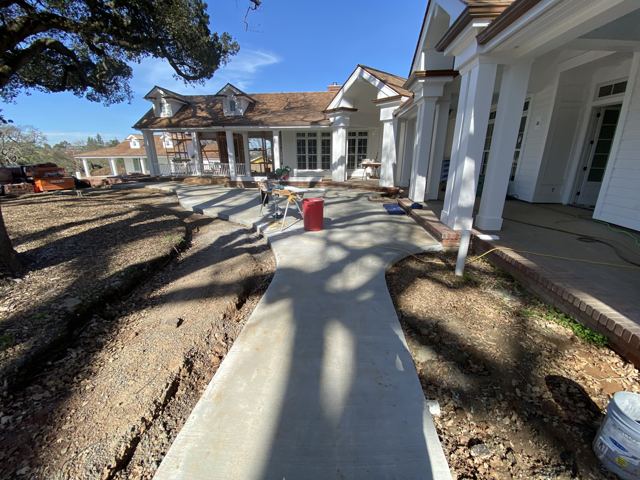
Conduit bored under driveways, walkways, retaining walls and landscaping.
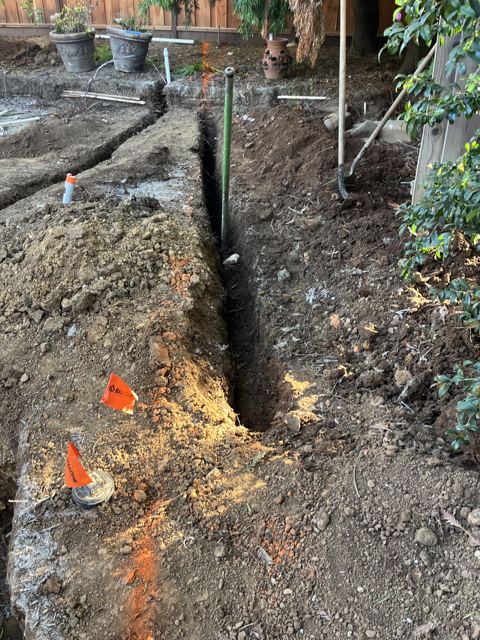
TrenchlessWhere required, trench to PG&E depth with sand bedding, caution tape and compacted backfill.
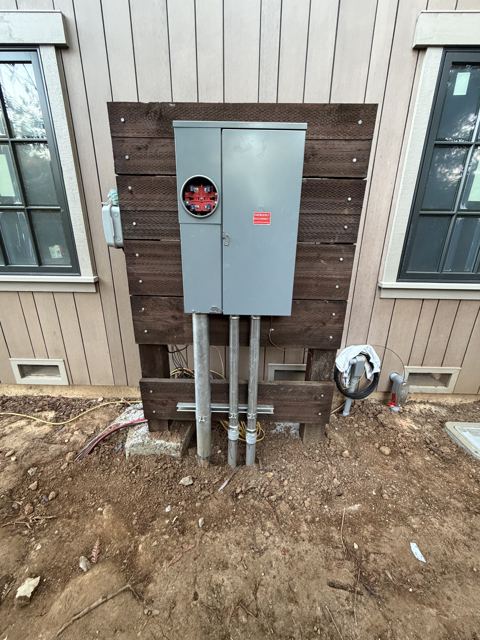
PG&E-spec conduit and sweeps from the pole riser or service box to your meter location.
GreenbookPre-con, trench, sand & tape and mandrel inspections handled by our OQ-certified crew.
OQ CertifiedAsphalt, concrete, pavers and landscape put back the way we found them.
You apply with PG&E; they design the service and issue a construction sketch.
We walk the route, recommend bore or trench and give you a fixed price.
We install the conduit and stand for every PG&E inspection.
Your electrician sets the meter panel; we coordinate with them.
PG&E pulls the cable, energizes the service and removes the overhead drop.
“David was able to start on the job immediately, pivot when we hit a large boulder underground… and dig underneath a retaining wall without damaging it. He has a deep understanding of the PG&E Greenbook.”
“David had to trench through my backyard paver patio, but he was careful to minimize the damage to the patio and set aside the removed pavers in a neat stack… helped me navigate the process with PG&E.”
“I couldn’t be happier with the results… all inspections were passed successfully without any issues.”


PG&E designs the new underground service and provides a construction sketch. We install the applicant-side work: the trench or bore from PG&E’s pole riser or service box to your meter, the conduit, sand and inspections. Your electrician handles the meter panel and wiring, and PG&E pulls the new cable and removes the overhead drop.
Start a new service or service-upgrade application with PG&E. Once you have the PG&E sketch, send it to us and we’ll price the underground work. If you don’t have an electrician yet, we can recommend one and coordinate with them.
Usually, yes. When the route crosses a driveway, hardscape or mature landscaping, a directional bore installs the conduit without tearing it up. Where PG&E requires an open trench or the run is short through dirt, we trench and restore.
The underground work itself is usually a few days, plus PG&E inspections. The overall timeline depends mostly on PG&E scheduling for the design, inspections and the final cable pull.
Yes. We are PG&E OQ certified and stand for the pre-construction meeting, trench, sand-and-tape and mandrel inspections.
Based in Santa Clara, working throughout Santa Clara County, the Tri-Valley and Lamorinda.
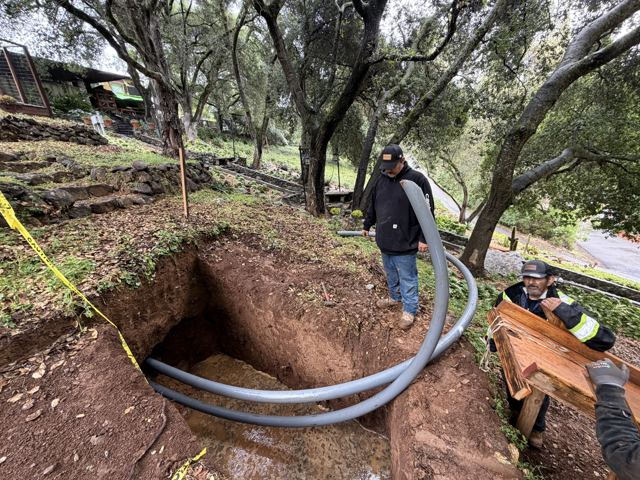
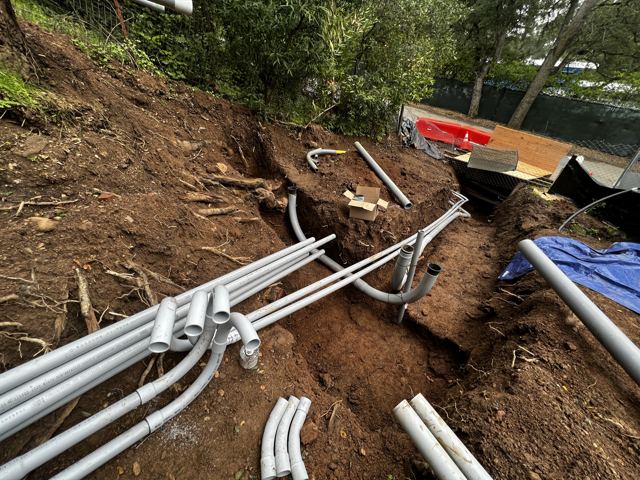
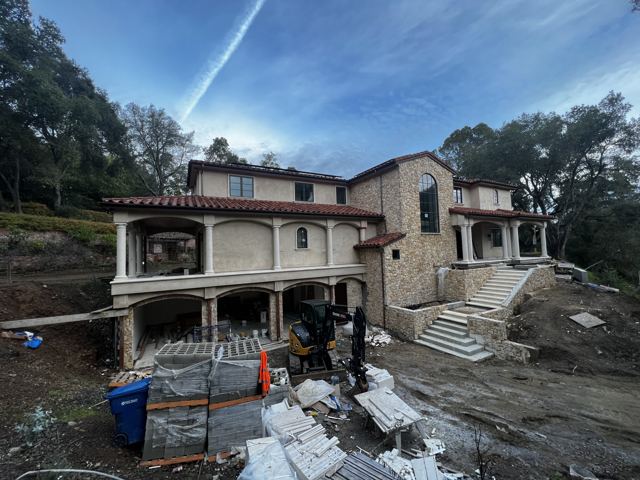
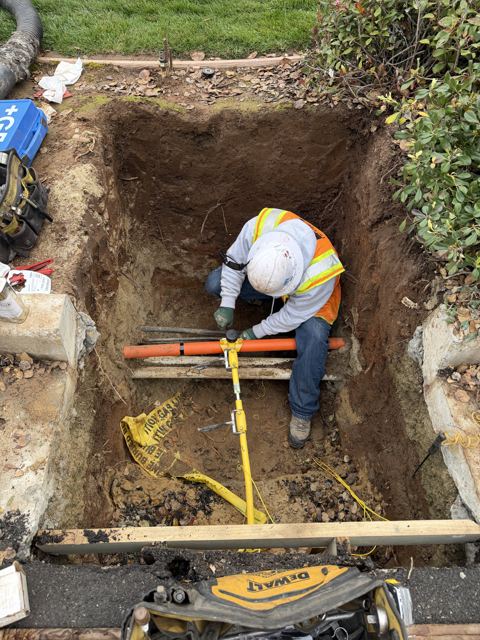
Photos from real Apex jobs across Santa Clara County — our crew, our equipment. Tap any photo to enlarge.


“He guided me through the correct procedures to comply with PG&E’s Greenbook requirements… all inspections were passed successfully without any issues.”
“Able to start on the job immediately… and dig underneath a retaining wall without damaging it. He has a deep understanding of the PG&E Greenbook.”
“He was careful to minimize the damage to the patio and set aside the removed pavers in a neat stack… helped me navigate the process with PG&E.”
Send us your PG&E construction sketch or your address. We’ll walk the route and price bore, trench or both.